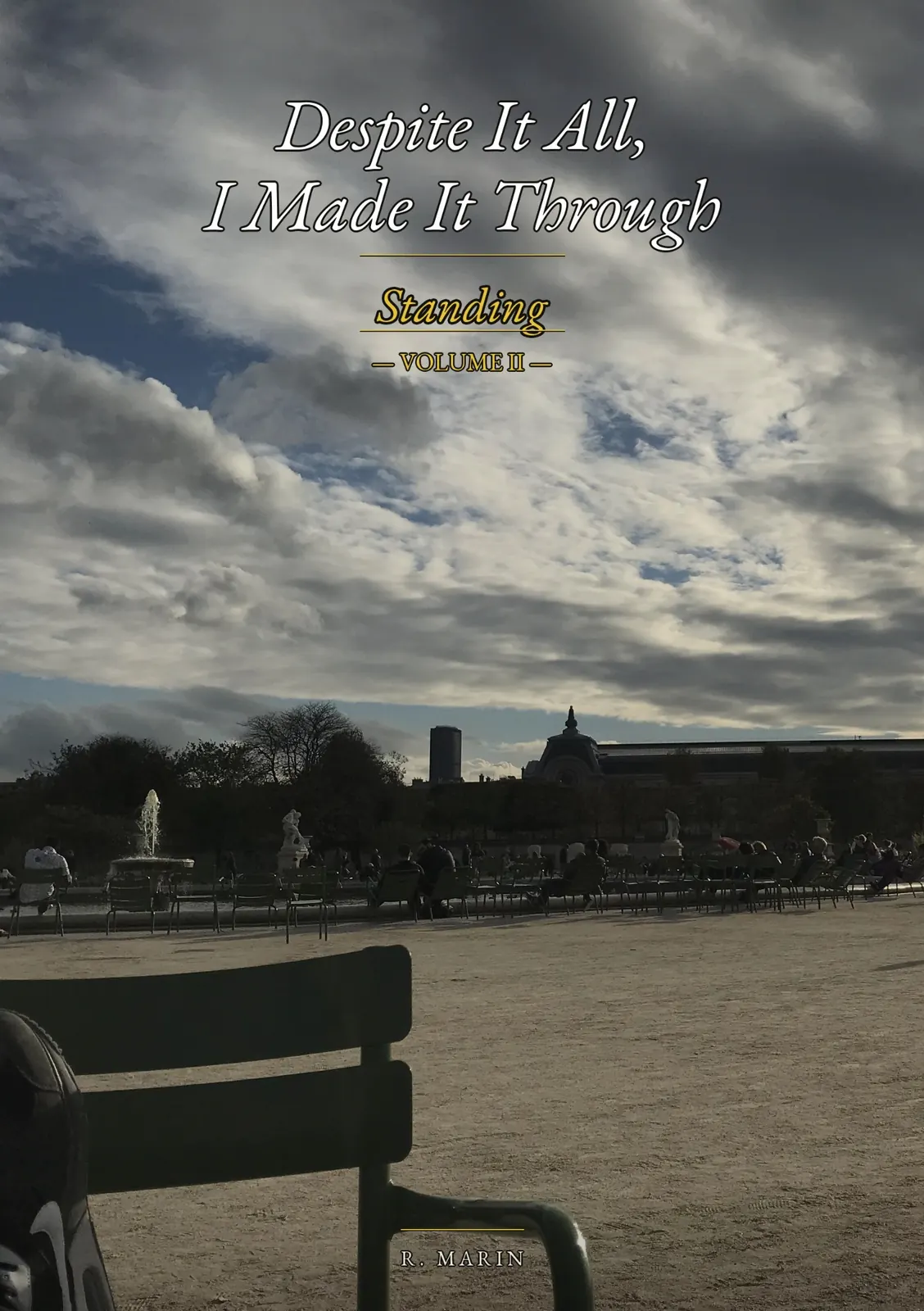


Leaving Italy at eighteen and learning how to stand on your own in a new life.
Standing opens with an early-morning arrival in Paris. Tommaso is eighteen, carrying almost nothing, and discovers an enormous city that seems to run according to rules nobody ever taught him.
French is a wall at first. Then come immigration paperwork, a residence permit, precarious jobs, restaurants, temporary work and days spent simply figuring out how to move forward. This is no longer the childhood of Volume I: it is the rough apprenticeship of independence.
Alongside that rebuilding come first relationships, temporary rooms, mistakes, and doors that open or close. The book explores what becoming an adult can mean when family reference points are fragile and almost everything has to be learned while already living it.
Behind the story of a young Italian in France, Standing is also about displacement, language, work, loneliness, improvisation and the possibility of making a place for yourself in a world that was not waiting for you.
Which readers?
For readers of immigration, coming-of-age and rebuilding stories; for anyone interested in displacement, language barriers, first jobs, unstable housing or becoming an adult without much of a safety net.
This page introduces Standing without revealing the turning points in Tommaso’s life.
Starting again at eighteen
Arriving in Paris is only the beginning. Tommaso must learn the language, understand unfamiliar rules and find his way through a city far larger than anything he has known.
Work and everyday independence
Restaurants, first wages, paperwork and temporary rooms shape the years when he learns to rely on himself. The story shows both the cost of these beginnings and what they make possible.
Growing up without instructions
Encounters, relationships and mistakes accompany his entry into adult life. After the childhood of Volume I, Standing follows the next stretch of the journey, with its hopes and uncertainties.